Key points :
- Population Viability Analysis (PVA) analysis predicts that there will be local extinction as many as 19 of the 22 remaining pockets within the next 100 years.
- There are three area that must be prioritized on Java leopard conservation, that are Ujung Kulon National Park, Halimun – Salak, and Merubetiri.
- Hunting and trading of Java leopard is still happening. In 2015, many leopard were snared while in 2019, many leopards was sold freely on social media platforms and sold illegally.
- Zoos should be able to return to nature and not become collection, because the animals in the zoo is owned by state and not by zoo.
- Indonesian government is not capable enough in wildlife population management at the moment. An activities such as inventory and monitoring already overhelmed, especially if they want to upgrade on managing a population.
Summary
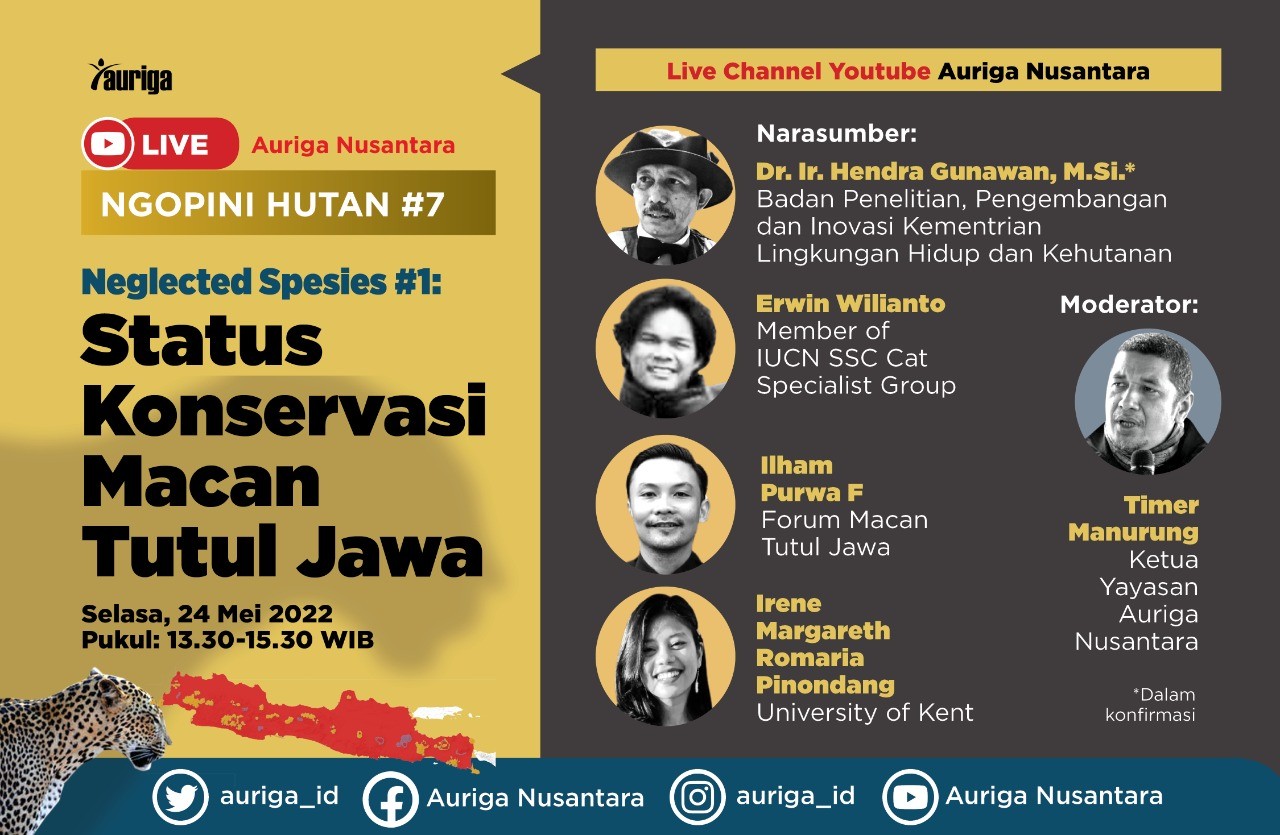
Erwin Wilianto, member of IUCN SSC Cat Specialist Group said that only 24% of total forest area in Java remained. In the forest, there are many types of protected animals such as Javan rhinoceros, eagle, Bleeding toad, and Javan leopard. Specially Javan leopard, it is estimated that its habitat is only 11.000 km2 which is divided into 22 habitat pockets spread from Ujung Kulon National Park in the western part of Java’s island up to Alas Purwo in the eastern part of Java’s island. Previously, it was estimated that there were 29 landscapes considered suitable for the habitat of Javan leopard. However, based on the latest assessment, it was confirmed that 22 landscapes had Javan leopard while the other 7 had no found any Javan leopard. Based on the latest estimation, it is known that the remining 319 Javan leopards are scattered throughout Java’s island.
Irene Margareth Romaria Pinondang, Doctoral student from University of Kent said that status of Javan leopard changes from Critically endangered to Endangered. The status changes not due to the condition of Javan leopard population that is getting better, but due to better information and data quality regarding distribution, population, and threats. For example in 2008, only two national parks were counted, which were then extrapolated. Meanwhile, in 2021, data collection will carried out in nine national parks which are the habitat of the Javan leopard. Based on the Population Viability Analysis (PVA) analysis, it is predicted that there will be loacal extinction as many as 19 of the 22 remaining pockets within the next 100 years.
There are three areas that must be prioritized, that are Ujung Kulon National Park, Halimun – Salak, and Merubetiri. The three national parks have a large number of leopards (>50 individuals), have a large area and most importantly it’s a protected area. This is the background for the recommendation for the determination of the three priority areas, concluded Margaret.
Erwin Wilianto also said that the availability of leopard habitat and roaming space is decreasing, especially since the leopard are starting to enter the forests that are directly adjacent to the community. Javan leopard habitat space is increasingly being pushed down due to land clearing for agriculture and property, as well as the need for the skin and organs of leopard for cultural equipment (Reog). These things lead to an increase the number of conflict. Leopard conflict from 2007 – 2019 has a increase significantly. Beside the increase number of conflict, the number of hunting and trading of leopard still happening. In 2015, many leopard were snared while in 2019, many leopards was sold freely on social media platforms and sold illegally.
The thinks that need to pay attention to beside the population condition in in-situ also the population condition in ex-situ. Javan leopard that are in ex situ area should be in harmony with those in situ to support the population on the nature. However, only those from the Animal Rescue Center (PPS) have been available for wildlife animal realease into the wild so far while the zoo has never done the same think meanwhile at the same time the number of animals in the zoo is not small. The hope is the zoo can return the existing animals to their nature and not become collection, and what needs to be remembered is that the animals in the zoon are owned by state, not by zoo.
The effort of Indonesia government is not capable enough on wildlife population management. An activities such as inventory and monitoring already overhelmed, especially if they want to upgrade on managing a population. Nevertheless, it should be happens in the future and we don’t want the isolated pockets of population will experience local extinction either. We ever once lost our Javan tiger and we certainly don’t want any of our Javan leopard to lost in the wildlife, don’t let it happen again in the future when we lose the Javan tiger. Let’s work together to support leopard conservation from the remaining Javan leopard.
Ilham Purwa F, the member of Javan Leopard Forum said that the challenge that we face on Javan leopard conservation are Multi-stakeholder cooperation, conflict, periodic estimation of the population in nature, improving the function of the remaining habitat of Javan leopard, ensuring connectivity between pockets of the population remains and ensuring conservation efforts, especially those outside conservation areas that must be top priority in conservation efforts for the Javan leopard.
The entire discussion can be watch on youtube channel Auriga Nusantara.
Resource Person
- Erwin Wilianto (Member of IUCN SSC Cat Specialist Group) : Human – Javan leopard interaction and its mitigation efforts.
- Ilham Purwa F (Member of Javan Leopard Forum) : Multistakholder roles on efforts of Javan leopard conservation.
- Irene Margareth Romaria Pinondang (University of Kent) : Population condition and challenge of Javan leopard conservation.
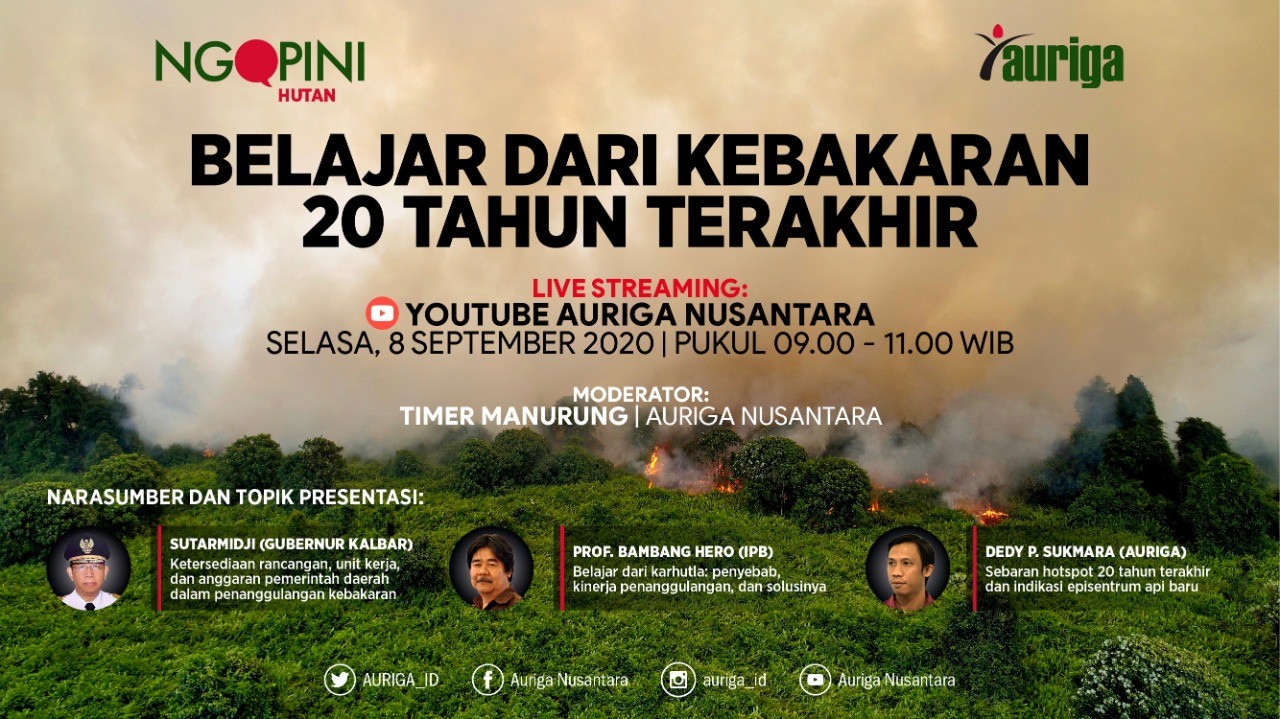
Belajar dari kebakaran hutan dan lahan 20 tahun terakhir
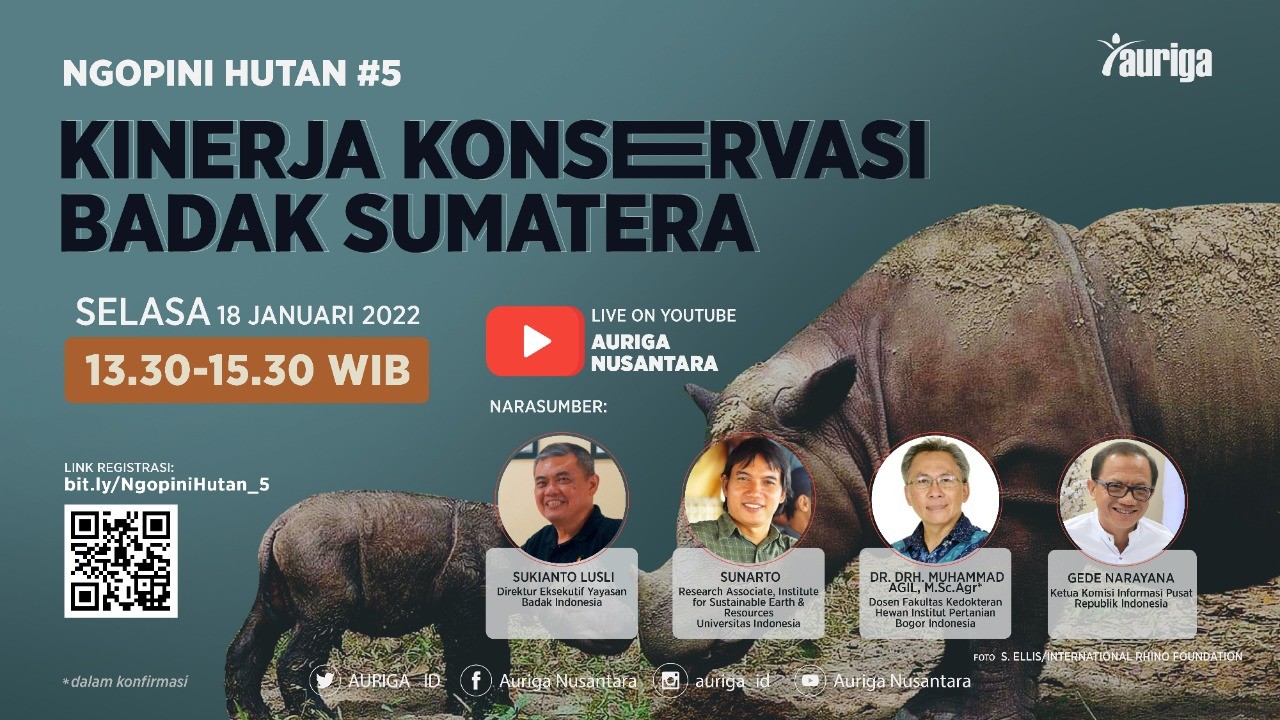
Conservation Performance of Sumatran Rhino