Jakarta, 18 November 2019 – The Anti-Forest Mafia Coalition today published a report analyzing the role of the pulp or paper industry in Indonesia in the frequent fires and haze that afflict Southeast Asia. According to estimates by the Copernicus Atmosphere Monitoring Service in the European Union, as of November 14, 2019, forest and land fires in Indonesia have released about 708 megatons of carbon dioxide (CO2), or nearly twice the CO2 emissions from fires in the Brazilian Amazon. Nearly one million people in Indonesia suffer from acute respiratory infections as a result of concentrated smoke. The United Nations Children's Fund (UNICEF) estimates that 10 million children in Southeast Asia are also affected.
Although the owners of Industrial Plantation Forest (HTI) concessions, especially the suppliers of wood to industries owned by Indonesia's two largest pulp producers - namely the Asia Pulp & Paper Group (APP) and Asia Pacific Resources International Limited (APRIL) - claim to reduce the risk of fires in their concessions , however, serious fires in HTI concessions continued this year. Of the eight worst fires in HTI concessions, six were APP suppliers and one APRIL supplier (see table below).
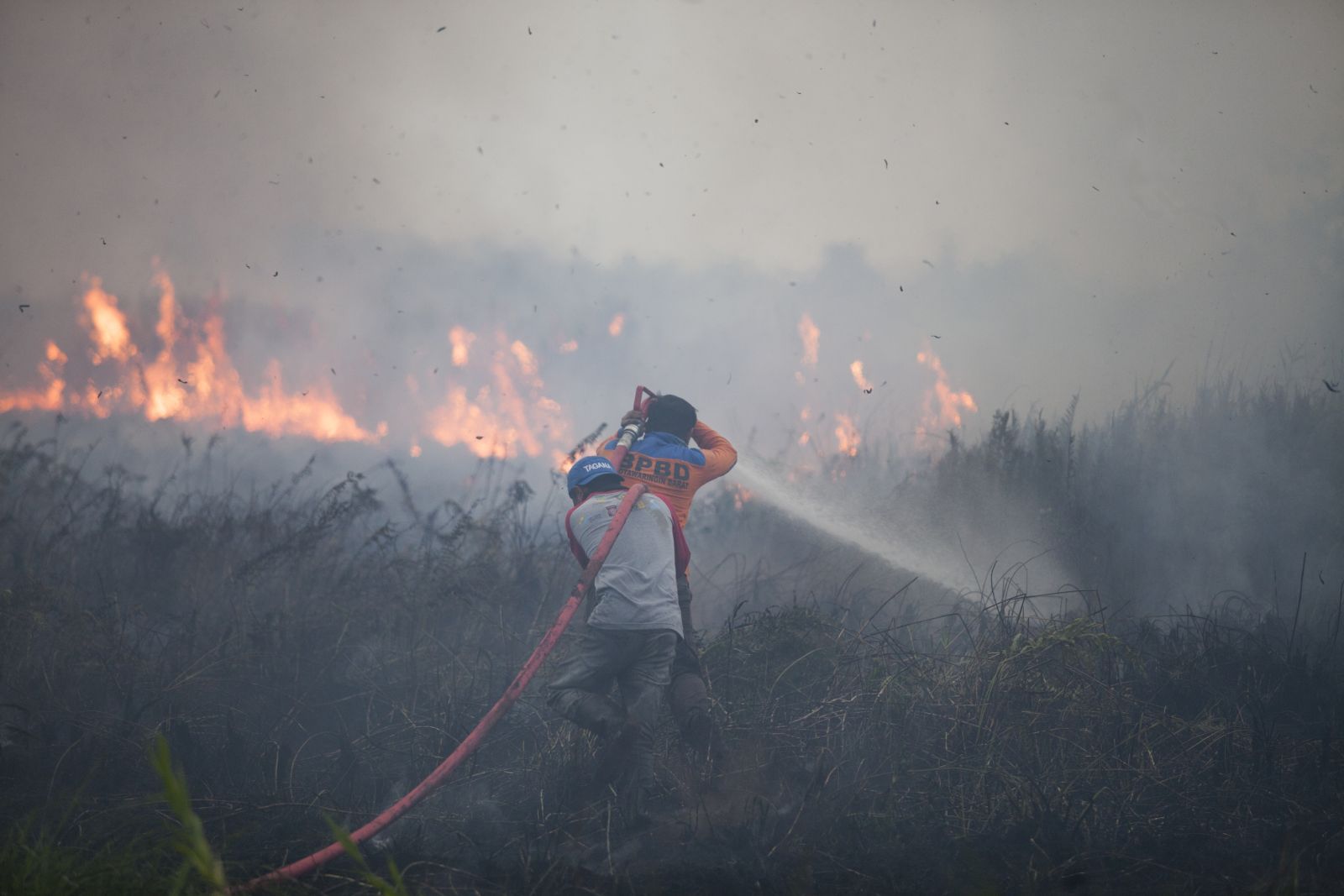
In 2015, fires and haze were estimated to have scorched 2.6 million hectares causing an economic loss of Rp 220 trillion (US $ 16 billion) and are thought to have contributed to the premature death of more than 100,000 people. Some of the places that experienced the worst fires were inside HTI concessions. As a result, some of these companies have been investigated by law enforcement in Indonesia and Singapore.
After the 2015 fires, instead of reducing production capacity, both APP and APRIL invested in building new processing capacity. Predictably, this will exacerbate pressure on peatland use. APP opened one of the largest pulp mills in the world, in South Sumatra Province at the end of 2016. Most of its wood raw materials come from HTI areas on drained peatlands, including some of the areas that experienced the worst fires in 2015. APRIL began producing a new type of pulp which allegedly using a special production process with Acacia crassicarpa wood as raw material, a tree species that is only grown on peatlands.
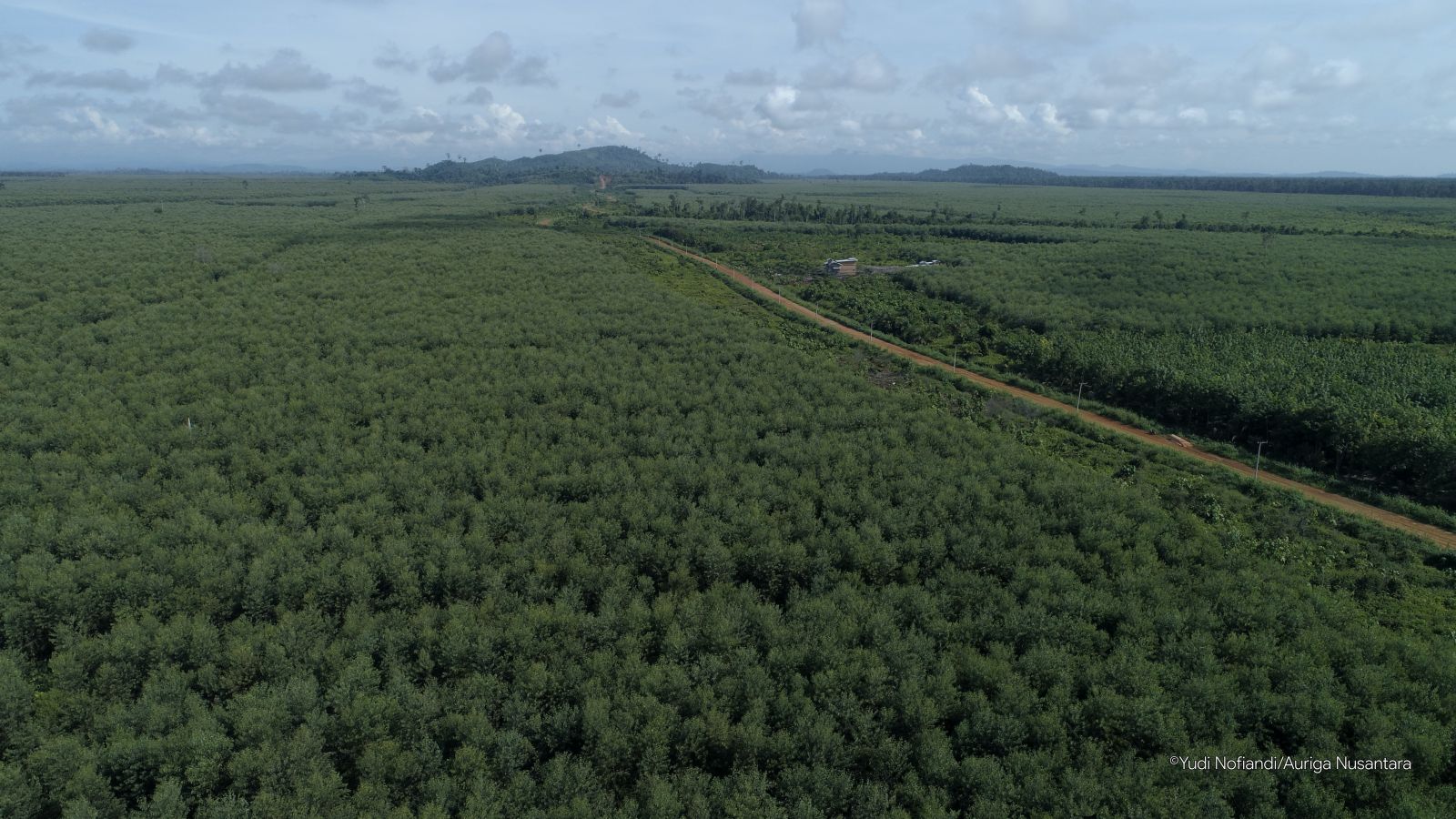
Such investment in processing capacity will increase APP and APRIL's dependence on drained peatlands. Peatland restoration that is being proclaimed will be increasingly difficult. The Coalition predicts that the risk of peatland fires will increase in the coming years, if massive peatland restoration efforts in HTI concessions are not carried out. Moreover, the El Niño cycle will be even more intense.
A number of well-known brands are tracked using APP and APRIL products as raw materials. APP products, for example, are used by Nestlé based on information available on the company's website. APRIL pulp is supplied to Sateri affiliates for further processing into viscose staple fiber (VSF), which is used to produce synthetic textiles. Based on the 2017 Changing Markets report, Sateri's customers appear to include global apparel retailers Zara and H&M.
.jpg)
To emphasize the link between drained peatlands and fire risk, it should be noted that 40% of 2019 hotspots detected inside HTI concessions occurred on peatlands. After the 2015 fires, the Indonesian Government protected 12.4 million hectares of peatland through Government Regulation Number 57 of 2016 concerning Amendments to Government Regulation Number 71 of 2014 concerning the Protection and Management of Peat Ecosystems (PP 57/2016) which requires HTI companies to carry out activities rewetting and peat restoration. However, in April 2019, these protection provisions were significantly weakened through a new regulation from the Ministry of Environment and Forestry (KLHK), namely Minister of Environment and Forestry Regulation Number P.10 / MENLHK / SETJEN / KUM.1 / 3/2019 concerning Determination, Determination and Peat Dome Peak Management Based on Peat Hydrological Unit (P.10 / 2019). The coalition report found that nearly 50% of fire alerts in the eight HTI concessions that experienced the most hotspots occurred within areas designated as Peatland Protection Function under the previous Government policy (PP 57/2016) on peat management.
The coalition's report provides recommendations to APP and APRIL and their wood supplier companies to carry out massive restoration and protection in the peat ecosystem. To achieve this, the company will need to adopt an accountable work plan with a definite schedule for phasing out HTI activities on peatlands. The recommendations of this report to the Government of Indonesia include strengthening provisions on peatland management and protection, and strengthening law enforcement so that pulp/pulp producers and HTI license holders can be held legally responsible for making peatlands prone to fire.
MORE REPORT
Contact:
Syahrul Fitra (Auriga): syahrul@auriga.or.id
Rudiansyah (WALHI Jambi): rudi.jambi@gmail.com
Aidil Fitri (Hutan Kita Institut): aidilplg@gmail.com
Updated from previous release: (18 November 2019) Industri Pulp Memperparah Risiko Kebakaran Hutan dan Lahan Gambut Indonesia
Artikel Lainnya
Entering the Elephant House

Javan rhino : conservation setbacks in ujung kulon national park (2023)
Jakarta, 11 April 2023 - Eighteen Javan rhinos (Rhinoceros sondaicus sondaicus) have disappeared in Ujung Kulon since 20...
New Analysis: Batang Toru Hydroelectric Plant Unnecessary
JAKARTA, 22 JANUARY 2020 — The Batang Toru Hydroelectric Power Plant (PLTA) built with a budget of USD 1.6 billion (equi...