JAKARTA, 22 JANUARY 2020 — The Batang Toru Hydroelectric Power Plant (PLTA) built with a budget of USD 1.6 billion (equivalent to IDR 23.7 trillion) is not only unnecessary to meet North Sumatra's future electricity needs, but also threatens the survival of the tapanuli orangutan (Pongo tapanuliensis).
This was revealed in a report entitled Analysis of Electricity Demand in North Sumatra Province and the Impact of the Batang Toru Hydro Power Plant Plan (2020). The report written by Dr. David Brown, a principal at Brown Brothers Energy and Environment (B2E2), found:
-
North Sumatra is almost fully electrified, and rolling blackouts are largely a thing of the past. The province has a power surplus. In view of the addition of gas-fired peak power capacity added in 2017 and ongoing improvements in grid infrastructure, the building of Batang Toru would not materially improve access to nor the regularity of power supply in the province.
-
Batang Toru will not replace “diesel power plants rented from overseas,” as there are no such plants in North Sumatra. There is a rented floating gas-fired power plant. But the climate change and balance of payments implications of burning gas are quite different from those of burning diesel.
-
The need for Batang Toru’s proposed peak power capacity is already diminishing, due to the existence of a 240 MW floating gas plant, and the likely future construction of 800 MW in new gas fired peak power which will come on line in 2022 (200 MW), 2024 (300 MW) and 2028 (300 MW). Like Batang Toru, these gas plants produce peak power during the night and could also produce power during the day, if needed.
-
It is claimed that the commissioning of Batang Toru would result in reduction of a very modest .0016 to .0022 gigatonnes of annual CO2 emissions per year. But even these are overestimates. Reductions made possible by Batang Toru are more likely to be on the order of .0007 to .001 gigatonnes of CO2 annually. Regardless, potential emissions reductions represent on the order of just one tenth of one percent of Indonesia’s annual emissions but come with enormous environmental cost.
-
The Batang Toru hydropower plant will not replace “diesel-powered power plants leased from abroad,” because in fact, there is no power plant like the one occupied in North Sumatra. What does exist is a floating power plant and rented gas power. The implications of climate change and the balance of payments for using natural gas are different from those of diesel.
-
As for Batang Toru’s proposed contribution to the province’s baseload power, this is already being rendered unnecessary by the 330 MW Sarulla geothermal power plant which came on line in 2017 and 2018, and could be rendered even more superfluous by a 300 MW “expansion” in capacity at Sarulla starting in 2022, as well as a the “high possibility” of 240 MW in new geothermal power at Sorik Marapi. Another excellent option for the production of power during the day would be solar power; the report recommends that the Directorate General of Electricity and PLN should give greater consideration to solar power.
-
Batang Toru will not put diesel power plants out of business, and thus will not alleviate the negative balance of payment impact to the nation caused by the import of diesel. However, the high capital costs of building Batang Toru will lead to the outflow of dollars from Indonesia and into the bank accounts of the Chinese contractor that will build the plant, as well as the Chinese holding company that owns the majority of the plant, all to the detriment of Indonesia’s balance of payments.
-
Sinohydro, the contractor that is building Batang Toru has a global track record of fraud, non-standard practices, and corruption on three continents, all of which suggests that Batang Toru has significant construction and operations risks.
-
The Directorate General of Energy’s overly robust projections of power demand have led to an overbuilding of power plants in North Sumatra. This may be a blessing in disguise, as it could mean that there are many excellent substitutes available for the peak power (Point 5 above) and baseload power (Point 6 above) that Batang Toru aims to produce without threatening one of Indonesia’s world famous natural treasure, the endangered Tapanuli orangutan.
Shunned by lenders?
This hydroelectric dam was first announced in 2012. Now the project has transformed into the Batang Toru hydropower plant. The project, which was built by North Sumatra Hydro Energy (NSHE), includes the construction of electrical substations, substations, headrace and tailrace tunnels, reservoirs, spillways and supporting infrastructure, installation of turbines, generators and transformers, and laying of transmission lines. It is
Traditional lenders were reluctant to fund this project because of the threat to the endemic species tapanuli orangutan (Pongo tapanuliensis) and the lack of project benefits. The multilateral development bank, World Bank Group, has withdrawn from this project. The Asian Infrastructure Investment Bank has also reportedly refused project funding. Likewise private investment banks, such as Goldman Sachs.

Although the contractor for this project, Sinohydro, comes from China, the Bank of China has reportedly withdrawn from funding the project.
"I am happy that [electricity] generators are sustainable, environmentally friendly, and pollutant-free. Microhydro and minihydro, run-off type is the answer, because Indonesia [has] many rivers and this must be maintained with the correct catchment area so that the water discharge continues to flow as planned," said Tri Mumpuni.
Habitat fragmentation of the tapanuli orangutan and the Sumatran tiger Since its announcement in 2012, the project has been criticized, especially by environmental activists, for fear of damaging the forest ecosystem that supports local people, especially those living downstream. The livelihoods of the population depend on the existence of these ecosystems, such as fisheries and agriculture. This concern has prompted environmental activists, including international, to press for a halt to the project.
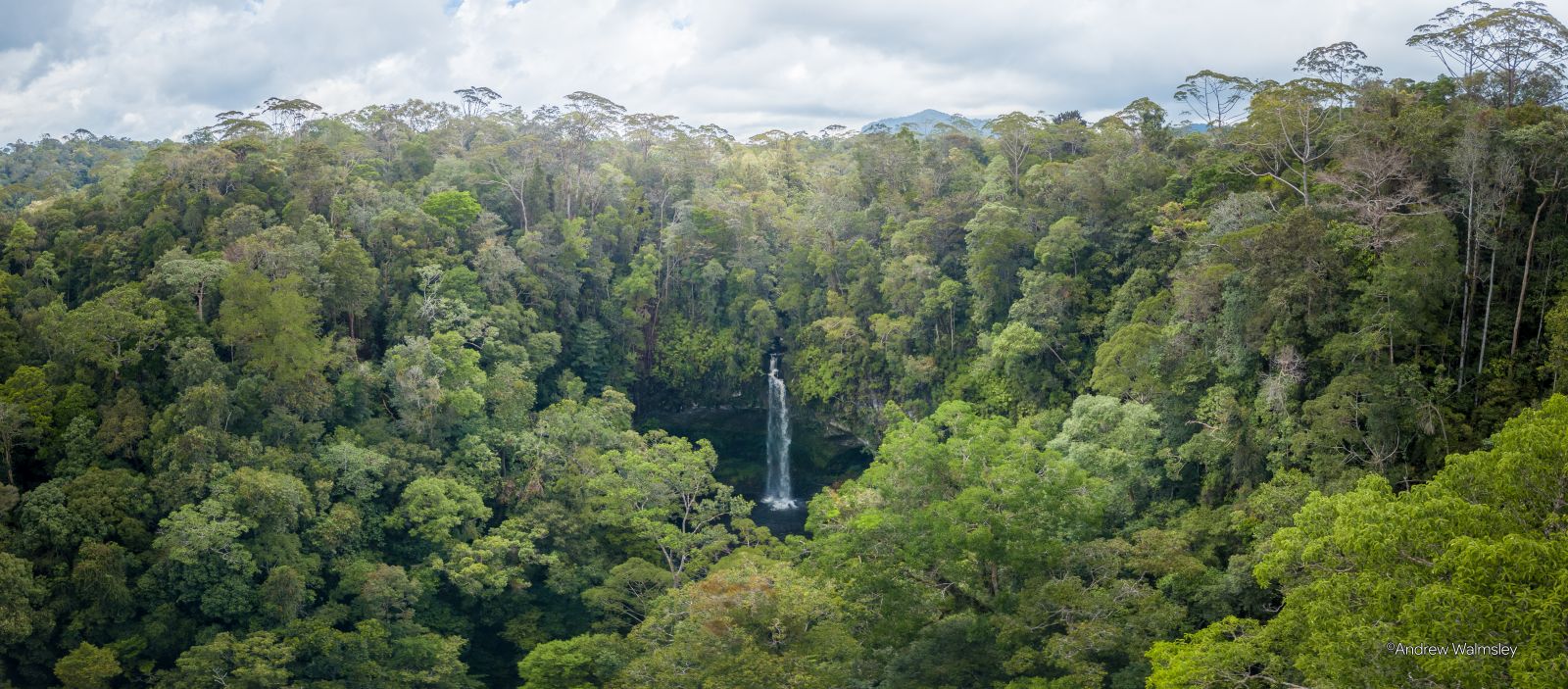
Batang Toru itself is an ecosystem that is rich in biodiversity. At least 310 species of birds, 80 species of reptiles, 64 species of frogs and toads, and more than 1,000 species of plants fill this ecosystem. Six of them are classified as vulnerable and endangered, including the gibbon (Symphalangus syndactylus), the gibbon (Hylobates agilis), which together with the tapanuli orangutan make Batang Toru one of the few ecosystems in the world where three species of ape can coexist. Sun bears (Helarctos malayanus), tapirs (Tapirus indicus), kuau kings (Argusianus argus) also live in this ecosystem. In fact, the Sumatran tiger (Panthera tigris sumatrae) is also found in Batang Toru.
Thus, the Batang Toru hydropower plant was opposed because it was feared that it would damage such a rich and unique ecosystem. Moreover, academics and conservationists later agreed that the orangutan living in the forests of North Sumatra was a separate species, and was named the tapanuli orangutan (Pongo tapanuliensis), so opposition was heightened. It is feared that the Batang Toru hydropower plant will permanently fragment the habitat of the tapanuli orangutan, thus contributing to its extinction. It is noteworthy that the total population of the tapanuli orangutan is less than 800 individuals, and with such threats making them the most endangered great apes in the world.
The report above acknowledges that from a technical point of view the Batang Toru Hydroelectric Power Plant is well designed. However, the report also suspects that the project's infrastructure has the potential to destroy or isolate 3 of the 5 blocks of the tapanuli orangutan habitat that exist today. Mimi Surbakti also stated, "The fulfillment of electrical energy should not sacrifice environmental sustainability which will lead to the extinction of protected endangered species. The government should be able to provide ecological justice to save the living space for people from the sources of destruction and exploitation of nature. "
Stop the Batang Toru hydropower plant
When it was announced for the first time, nearly ten years ago, hydroelectric power could be the answer. At that time, there was a shortage of electricity in North Sumatra. On the other hand, forest cover in North Sumatra is not as critical as it is today due to massive deforestation and forest fragmentation.
However, the situation now is very different. North Sumatra is almost completely electrified, while options for other renewable energy sources are also available.
"This analysis has considered the pros and cons that have occurred so far, and the conclusion is that the Batang Toru hydropower plant is not the infrastructure that North Sumatra needs. Therefore, this project should be stopped, or at least revisited," concluded Iqbal Damanik, Director of Mining and Energy Auriga Nusantara.(*)
MORE REPORT
Note:
Updated from previous release: (22 January 2020) Analisis: Pembangkit Listrik Tenaga Air Batang Toru Tidak Dibutuhkan
Artikel Lainnya
Entering the Elephant House

Javan rhino : conservation setbacks in ujung kulon national park (2023)
Jakarta, 11 April 2023 - Eighteen Javan rhinos (Rhinoceros sondaicus sondaicus) have disappeared in Ujung Kulon since 20...
Shedding Light on Political Corruption in Indonesia’s Coal Mining Sector
Jakarta, 17 December 2018 - The coal mining sector has become a political commodity and a source of funding for politica...