Pandemics should not be an excuse to exploit peatland area, as the previous similar project has provide the lessons.

Jakarta, June 15, 2020 -- Reasoning to anticipate a food crisis due to a pandemic, the government is again repeating: printing paddy fields on peatlands. Again the people were treated to an empty promise of food fulfillment, when neglecting land conversion, criminalizing peasants, even breeding agrarian conflicts in such a way.
That is what is now lurking in Central Kalimantan, after the government boosted the printing of rice fields in the area of the former Million Hectare Peatland Project (PLG). In fact, this PLG was the opening act for the extraordinary destruction of the peatlands of Central Kalimantan, and this is also one of the sources of fire that has been happening year after year in this province. Undoubtedly, the government said it would build a 300,000 hectare food estate in this area, and make it one of the National Strategic Projects.
The Ministry of Environment and Forestry (KLHK) then carried out Rapid-KLHS (Strategic Environmental Assessment). However, this Rapid-KLHS is not transparent and lacks public participation so that it has the potential to neglect public rights and environmental quality.
Responding to this situation, the Civil Society Coalition, consisting of 163 organizations and individuals, called on the government not to repeat the mistakes of the past which presented disasters to Central Kalimantan. The Coalition also asked the government not to use pandemics as an excuse to exploit peat.
The Coalition rejects the printing of these fields and urges them to stop, with the following considerations:
First, this project will add to state losses. This can be identified by reflecting on the PLG which was implemented based on the Presidential Decree 82/95 which was signed by President Soeharto in 1995. The PLG failed miserably and was stopped by President BJ Habibie through Presidential Decree 33/98. In fact, PLG absorbs at least Rp 1.6 trillion in the state budget. Not only the total failure to bring food barns, not a few of these areas are turned into oil palm plantations. In fact, PLG was built with the Reforestation Fund (DR), which was intended for forest recovery.
After the PLG failed, various national policies were deployed to this region for the sake of its rehabilitation, such as Keppres 80/1999 which also allocated compensation payments to affected communities and Inpres 2/2007 which allocated Rp. 3.9 trillion for rehabilitation. This area is also included in the priority of peat restoration in the aftermath of the 2015 severe fires.
It is difficult to find large-scale food estate projects, relying on the prioritization of the role of corporations, and the massive use of successful government budgets in Indonesia. Conversely, it's not hard to find food estate that fails and is full of corruption. Specifically for PLG, the main causes of failure are policies without a socio-ecological assessment of peat and an inability to understand locality. The damage caused is a trigger for routine fires that increasingly impoverish the people, even the costs of disaster management that drain the country's finances.
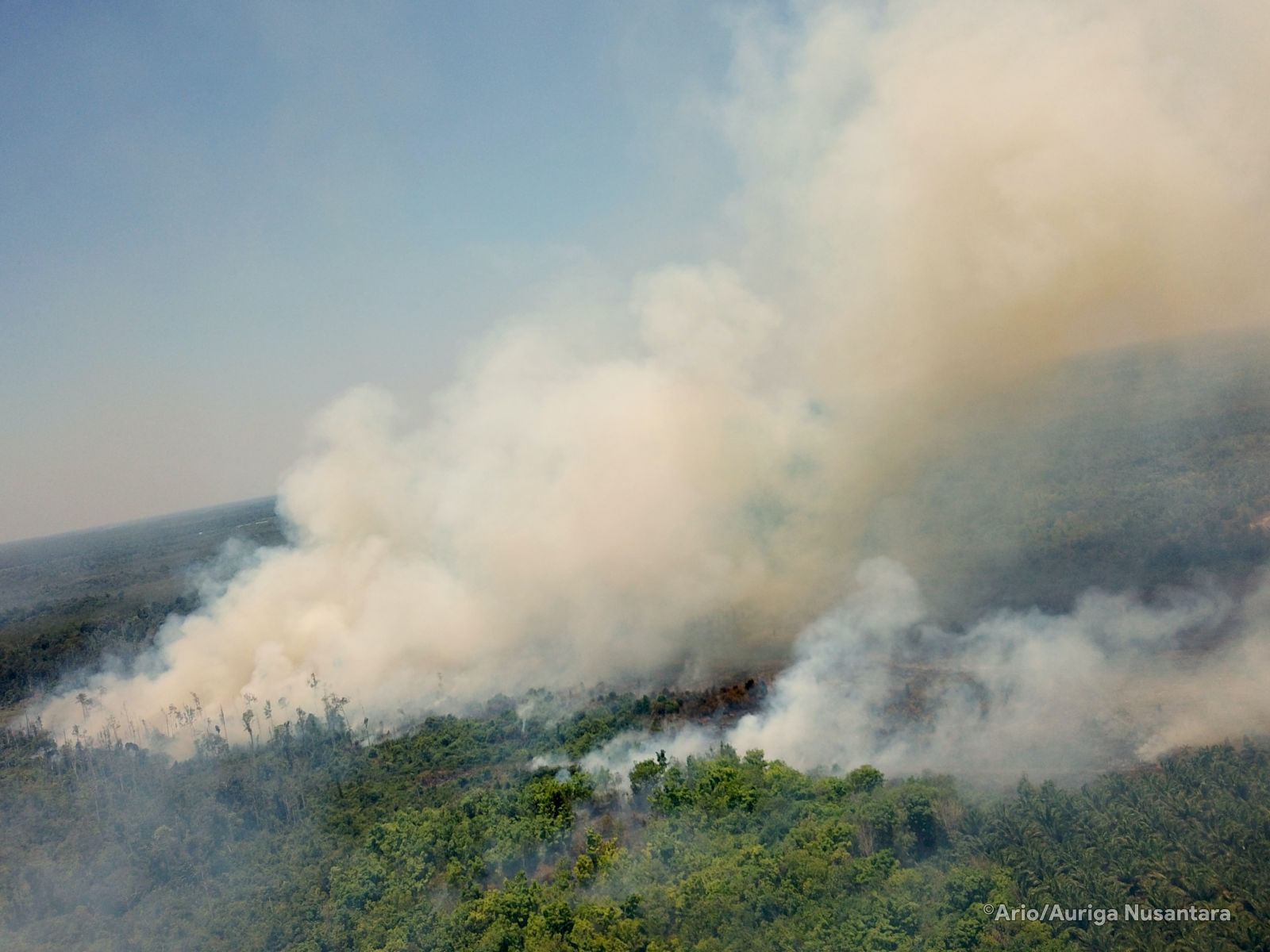
Secondly, the printing of rice fields on ex-PLG peat will damage nature, and the people will accept the consequences. The development of food estate on peatlands confirms the government's indifference to peat swamp ecosystems. In fact, peat is a unique ecosystem that is very important for climate balance and protection of wetland biodiversity, including ramin (Gonystylus bancanus) and meranti swamp (Shorea bal Pangeran), which is an endemic type of peat. The project will also leave the primary and secondary canal monuments causing peat drought so that they become a source of catastrophic fires that in addition to endangering the safety of residents also release greenhouse gas emissions.
.jpg)
Since the 1997 fires which devastated 80% and released 0.15 billion tons of carbon, every year this area has experienced fires. During 2015 - 2019 fires hit 465,003 hectares, or around 39% of the total 1,180,000 hectares of burned area in Central Kalimantan.
With regard to the 2015 fires, due to a citizen lawsuit, Putusan Mahkamah Agung RI No. 3555 / K / Pdt / 2018 dated July 16, 2019 has asked the government to issue policies that prevent forest fires including protecting peatlands as protected areas. The development of food estate on this peatland is a denial of the Jokowi Government towards the preservation of nature, including the protection and restoration of peatlands.
Third, the government should return the food affairs to farmers, so that they give farmers the right to land. After the failure of the PLG, the government should carry out recovery, including Kelola's access to the local community. However, in reality, inequality in land tenure and land conflicts has increased, triggered by the granting of permits for oil palm plantations in most ex-PLG.
Not only does it violate the rules of spatial allocation, these permits also seize indigenous peoples' lands and destroy local farming systems, such as handil, tatah, tabat, and traditional fisheries, such as beje. It also eliminates customary systems and other local wisdom, including agriculture / collective farming that has developed in indigenous communities so far.
This situation is exacerbated by the placement of transmigrants who do not consider the local situation. The social structure and land tenure model that conflicts customary land with land certificates also trigger land conflicts in the region.
With these considerations in mind, the Coalition rejects the development of food estate on Central Kalimantan's peatlands, as well as other areas in Indonesia.
In the current pandemic situation, especially when the infection curve continues to rise, the government should focus on efforts to control the spread of coronavirus. This zoonotic-driven pandemic should also be addressed by ensuring the protection of remaining natural habitats and restoration of already damaged ecosystems, including peatlands, and withholding the rate of increase in earth's temperature.
Fundamental change in the agricultural system is time to be done for the realization of food sovereignty. Corporate and large-scale orientation must be abandoned, and turn to diversity that respects locality. Agrarian reform has been so urgent. It is time for the agriculture and food system to be returned to the farmers and their empowerment so that they become the pillars of this agrarian country.
READ MORE
COALITION OF CIVIL SOCIETY
Contact person:
1. Dimas Novian Hartono (Walhi Kalteng) +62 813-5270-4704
2. Safrudin (Save Our Borneo) +62 811-5220-289
3. Arie Rompas (Greenpeace ) +62 811-5200-822
4. Aryo Nugroho (LBH Palangkaraya) +62 852-5296-0916
5. Margaretha Winda (SP Mamut Menteng) +62 812-5311-0627
Artikel Lainnya
Entering the Elephant House

Javan rhino : conservation setbacks in ujung kulon national park (2023)
Jakarta, 11 April 2023 - Eighteen Javan rhinos (Rhinoceros sondaicus sondaicus) have disappeared in Ujung Kulon since 20...
New Analysis: Batang Toru Hydroelectric Plant Unnecessary
JAKARTA, 22 JANUARY 2020 — The Batang Toru Hydroelectric Power Plant (PLTA) built with a budget of USD 1.6 billion (equi...