August 5, 2018 -- Asia Pulp & Paper (APP) and Asia Pacific Resources International Holdings Limited (APRIL) still buy wood from companies that clear natural forests, as seen in the report on the realization of fulfillment of industrial raw materials recorded in the official government system, or commonly referred to as Plan for Meeting the Online Industrial Raw Materials (RPBBI).
Both of these groups in 2017 recorded buying wood from PT Fajar Surya Swadaya (FSS), one of the Industrial Plantation Forest (HTI) concessions in East Kalimantan, which based on satellite imagery analysis felling around 20,000 hectares of natural forest since 2013. APP even recorded also bought wood from PT Silva Rimba Lestari, another HTI concession in East Kalimantan based on analysis of satellite imagery clearing around 12,000 hectares of natural forest since 2013.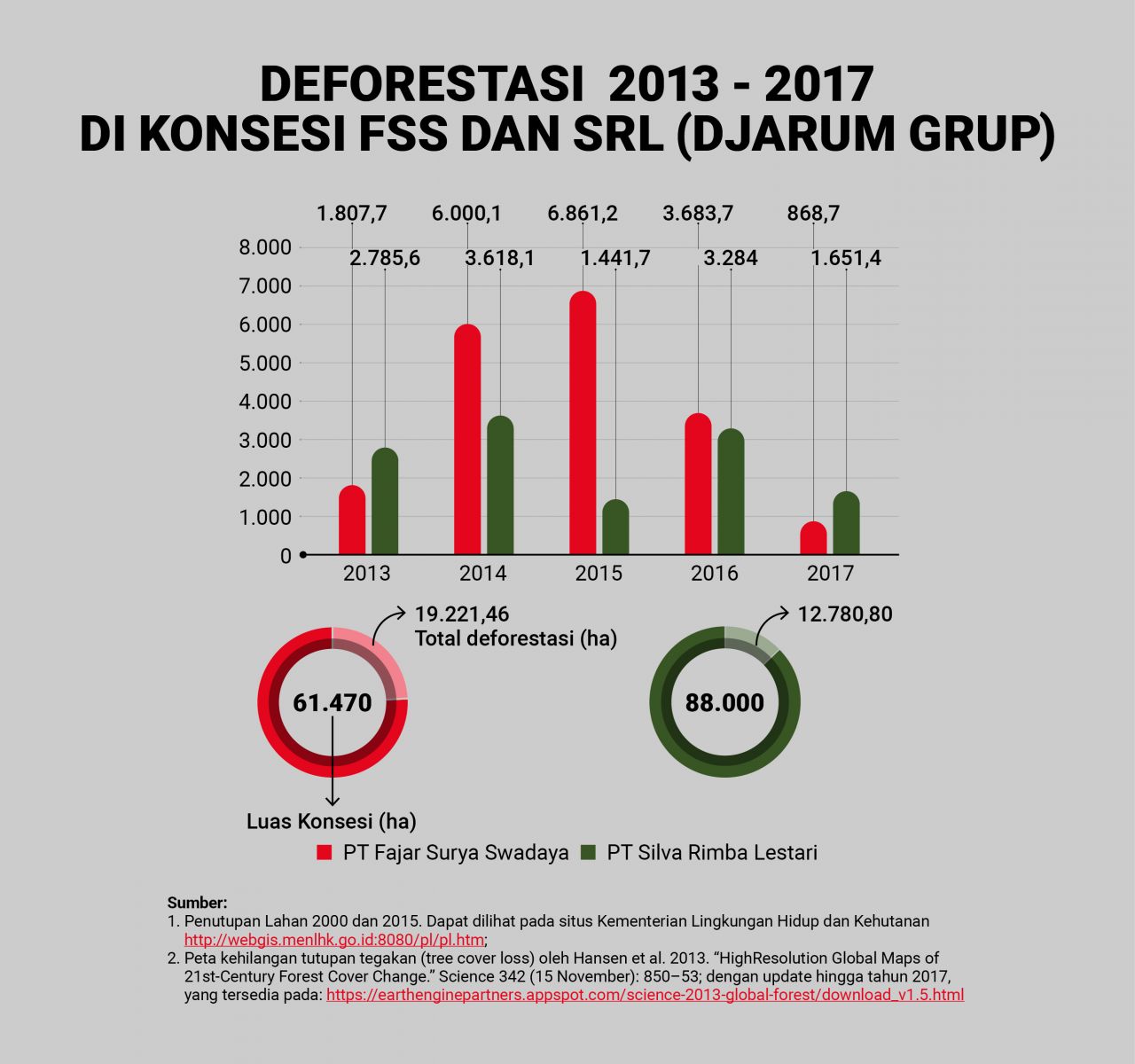
The finding that APP and APRIL are actually still buying wood from HTI concessions which cut down natural forests naturally raises fundamental questions about the seriousness of the zero deforestation commitment and respect for human rights in both supply chains. APP stated this commitment in 2013, which was then followed by APRIL in 2015. Moreover, without delivering convincing data on the ability of its plantation forest supply, both APP and APRIL are significantly increasing the capacity of its pulp mills and / or downstream processing.
READ MORE:
- Satellite imagery: Deforestation on the FSS Concession
Updated from the previous release: (August 15, 2018) Buy Djarum Group's deforestation wood in East Kalimantan, APP and APRIL violate the zero deforestation commitment.
Artikel Lainnya
Entering the Elephant House

Javan rhino : conservation setbacks in ujung kulon national park (2023)
Jakarta, 11 April 2023 - Eighteen Javan rhinos (Rhinoceros sondaicus sondaicus) have disappeared in Ujung Kulon since 20...
New Analysis: Batang Toru Hydroelectric Plant Unnecessary
JAKARTA, 22 JANUARY 2020 — The Batang Toru Hydroelectric Power Plant (PLTA) built with a budget of USD 1.6 billion (equi...